
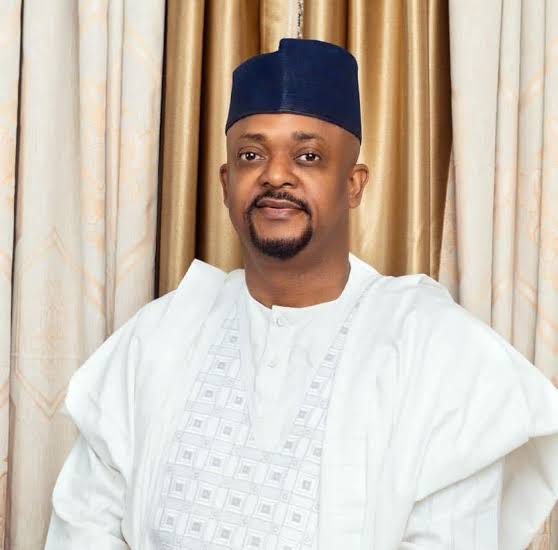
The Former Deputy Governor of Kogi State, Chief Edward Onoja has withdrawn a cybercrime petition filed against Mr. Anthony Ohiemi who accused him of ordering the execution of youths.
Chief Onoja who currently serves as a member of the Board of the South East Development Commission (SEDC), forgave Ohiemi after the false accuser apologized and tendered a public retraction of his publications.
The matter arose from allegations circulated on social media by Mr Anthony Ohiemi, popularly known as Bigbrother Property. During police investigation, Ohiemi admitted that the allegation was entirely false and that he possessed no evidence whatsoever to support it.
In a written apology, he accepted full responsibility for publishing the claim and acknowledged the damage it caused.
“Upon reviewing the facts, I acknowledge that this severe allegation was entirely false and completely without factual basis. There is no evidence, official documentation or truth whatsoever to support such a claim.”
He further admitted that it was irresponsible to circulate such a grave allegation without verification, apologised to Chief Onoja, his family and associates, removed the publication from all platforms under his control, publicly corrected the record and undertook never to repeat the falsehood.
Following the conclusion of the investigation, Chief Onoja, in a letter dated June 29, 2026 and addressed to the Director of the Nigeria Police Force National Cybercrime Centre, formally withdrew the petition he had filed on April 27, 2026.
He confirmed that the investigation established the complete absence of evidence against him and that the suspect had freely confessed to publishing the allegation without any factual basis.
According to Chief Onoja, the objective of approaching law enforcement was never vengeance but the restoration of truth.
“For me, the purpose of filing the petition was never about punishment. It was about establishing the truth, clearing my name and ensuring that false and damaging allegations were withdrawn. Those objectives have now been achieved.”
Having secured a public retraction, apology and an undertaking against future misconduct, he chose forgiveness over further prosecution.
“Having reflected on the matter, I have decided to forgive Mr Ohiemi and respectfully withdraw my petition. I sincerely hope he treats this experience as a turning point in his life and becomes a more responsible and law abiding citizen.”
Chief Onoja also commended the officers of the Nigeria Police Force National Cybercrime Centre for what he described as professionalism, diligence and fairness throughout the investigation, noting that their conduct reinforces public confidence in the institution’s ability to protect citizens from cyber-enabled offences.
Beyond the personal dispute, he reflected on a broader lesson for Nigerians in an age where information travels instantly.
“Freedom of expression comes with responsibility. No one should use social media or any platform to publish falsehood capable of destroying another person’s reputation. Words have consequences, and the law provides remedies where those boundaries are crossed.”
The episode has attracted widespread public attention, not merely because a defamatory allegation was disproved, but because it ended with accountability, remorse, forgiveness and reconciliation.
Observers say the case demonstrates that legal redress is not always about securing punishment. It can also serve to establish the truth, protect reputations, discourage reckless misinformation and encourage responsible public discourse.
Many Nigerians have commended Chief Onoja for choosing mercy after obtaining complete vindication. They argue that where falsehood has been exposed, reputations restored, wrongdoing acknowledged and genuine remorse expressed, forgiveness can become one of the highest expressions of justice.
At a time when misinformation spreads faster than facts, the case offers an enduring lesson: freedom without responsibility breeds injustice; truth requires courage to defend; and when truth ultimately prevails, forgiveness has the power to heal where punishment alone cannot.