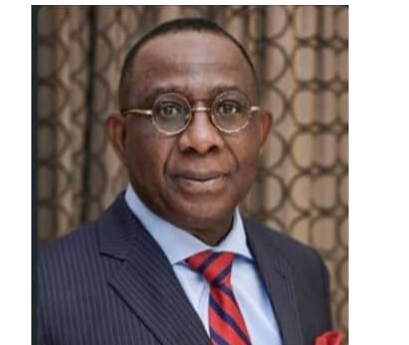
A renowned economist, Prof. Banji Oyelaran-Oyeyinka, has advised the President Tinubu led Federal Government to be decisive about reviving the moribund Ajaokuta Steel Company, describing it as Nigeria’s “greatest unfinished promise” and a symbol of stalled industrial ambition.
Speaking virtually at an international steel conference in Abuja, the professor said the Ajaokuta project—conceived in the late 1970s as the backbone of Nigeria’s industrialisation—has instead become a “development tragedy” and a financial burden.
“Steel is not just a commodity; it is the backbone of modern civilisation. Yet Ajaokuta, once envisioned as the cornerstone of our industrial take-off, now stands as a monumental white elephant,” he said.
Oyelaran-Oyeyinka criticised continued investment in the plant despite limited returns, estimating that between $6 billion and $10 billion—about N13 trillion—has been committed to the project without significant output.
He noted that the failure to operationalise Ajaokuta has had wide-ranging consequences for the economy, including reduced industrial capacity, job losses and increased dependence on imports.
According to him, Nigeria currently spends about $4 billion annually on steel imports, a trend he described as unsustainable.
“If Ajaokuta were operational, it could meet nearly a quarter of domestic steel demand and save close to $1 billion in foreign exchange yearly,” he said.
Drawing comparisons with countries such as China, India and South Korea, the economist said strategic investment in steel production played a key role in their industrial growth, adding that Nigeria has lagged due to policy inconsistency and implementation challenges.
He also highlighted the socio-economic impact of the stalled project, including lost employment opportunities, underdevelopment in host communities and missed chances to build a skilled industrial workforce.
Despite the challenges, Oyelaran-Oyeyinka expressed optimism that the situation could still be reversed with strong political will. He projected that reviving the plant could generate between $9 billion and $14 billion annually in GDP, save nearly $1 billion in foreign exchange and create over 70,000 jobs.
He emphasised the need for decisive leadership, urging President Bola Ahmed Tinubu to prioritise the project.
As part of his recommendations, the economist called for the privatisation of the steel company, arguing that decades of public sector control have not yielded the desired results. He proposed a model involving a Nigerian consortium in partnership with experienced international operators to take over majority ownership and management.
“The time for hesitation has passed. The time for decisive action is now,” he said.
He added that if efforts to revive Ajaokuta continue to face setbacks, Nigeria could consider establishing a new privately driven steel company, similar to the model adopted in developing the Dangote Refinery.
“A country of over 200 million people without primary steel production faces significant development constraints,” he said.
Oyelaran-Oyeyinka stressed that revitalising the steel sector is critical to Nigeria’s economic independence and industrialisation.
“Reviving Ajaokuta is not just about steel; it is about strengthening economic resilience and building a self-reliant future for Nigeria,” he added.