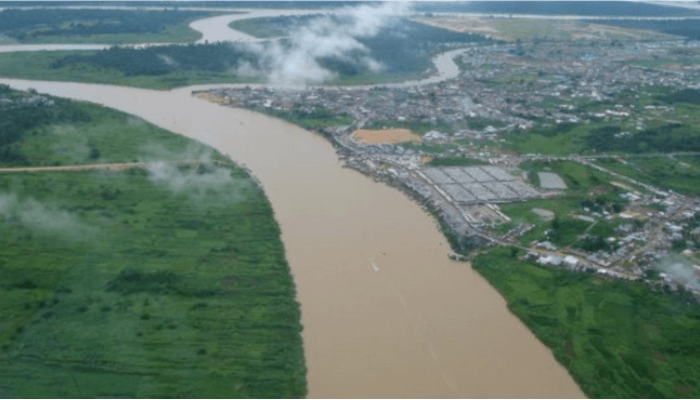
Kogi State government has been advised to collaborate with Federal Government and sustainable dredge River Niger and Benue, saying it would reduce road transport in Nigeria that is currently a topsy-turvy caricature.
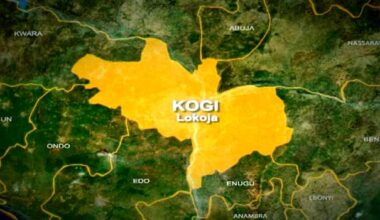
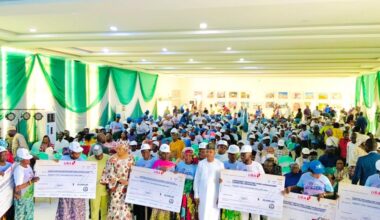
Femi Ajisafe, president of Kogi Chambers of Commerce, Industry Mines and Agriculture, stated this on Thursday, during the grand finale of Correspondent’s Chapel of Nigeria Union of Journalists (NUJ) Press Week 2026, in Lokoja.
Presenting his paper themed ‘Bad Road: Looking for Alternative Mode Through the Inland Waterways Corridor – Passenger and Cargo Transportation in Nigeria’, Ajisafe pointed out that Nigeria’s transportation infrastructure was largely dominated by roads network of about 195,000 Km; a distant second position to South Africa that reportedly has about 750,000Km of roads. According to ICRC, only about 30percent of Nigerian roads are paved (tarred).
He said: “This lends credence to the hazardous nightmarish experience of commuters — Vehicle owners, travelers and transporters.
“The prevalent influx of travel time, high probability of accidents and the attendant high cost of maintenance add-up to making road transport in Nigeria as is currently, a topsy-turvy caricature.
“On the other hand, inland waterways infrastructure is, in all, about 10,000 Kilometers. About 3,000 kilometers of Nigeria’s inland waterways are seasonally navigable.”
The Rivers Niger and Benue are Nigeria’s principal rivers which merge into a confluence at Lokoja.
“They both account for about 1,900 Km of waterways before letting their waters into the Niger Delta or entering the Ondo waterways on to the Lagos lagoon.
“Nigeria’s Rivers Niger and Benue are the lifeblood of the nation’s economy, supporting agriculture, fishing, and Commerce.
“However, their potential as transport arteries remain largely untapped. With congested roads and underutilised rail networks, it’s time to tum these waterways into bustling transport hubs.
“Nigeria’s waterways stretch over 8.000 km, with Rivers Niger and Benue forming the backbone. The Inland Waterways is a game-changer.”
He equally pointed out that it would be cost-effective, saying river transport is 20-30 percent cheaper than road for bulk goods (World Bank). It is also eco-friendly, lower emissions compared to truck and lorries.
He equally disclosed that it would provide job creation, boosts riverine economies, as it supports thousands of livelihoods, adding that it will at the same time reduce congestion, take pressure off roads and reduce accidents.