
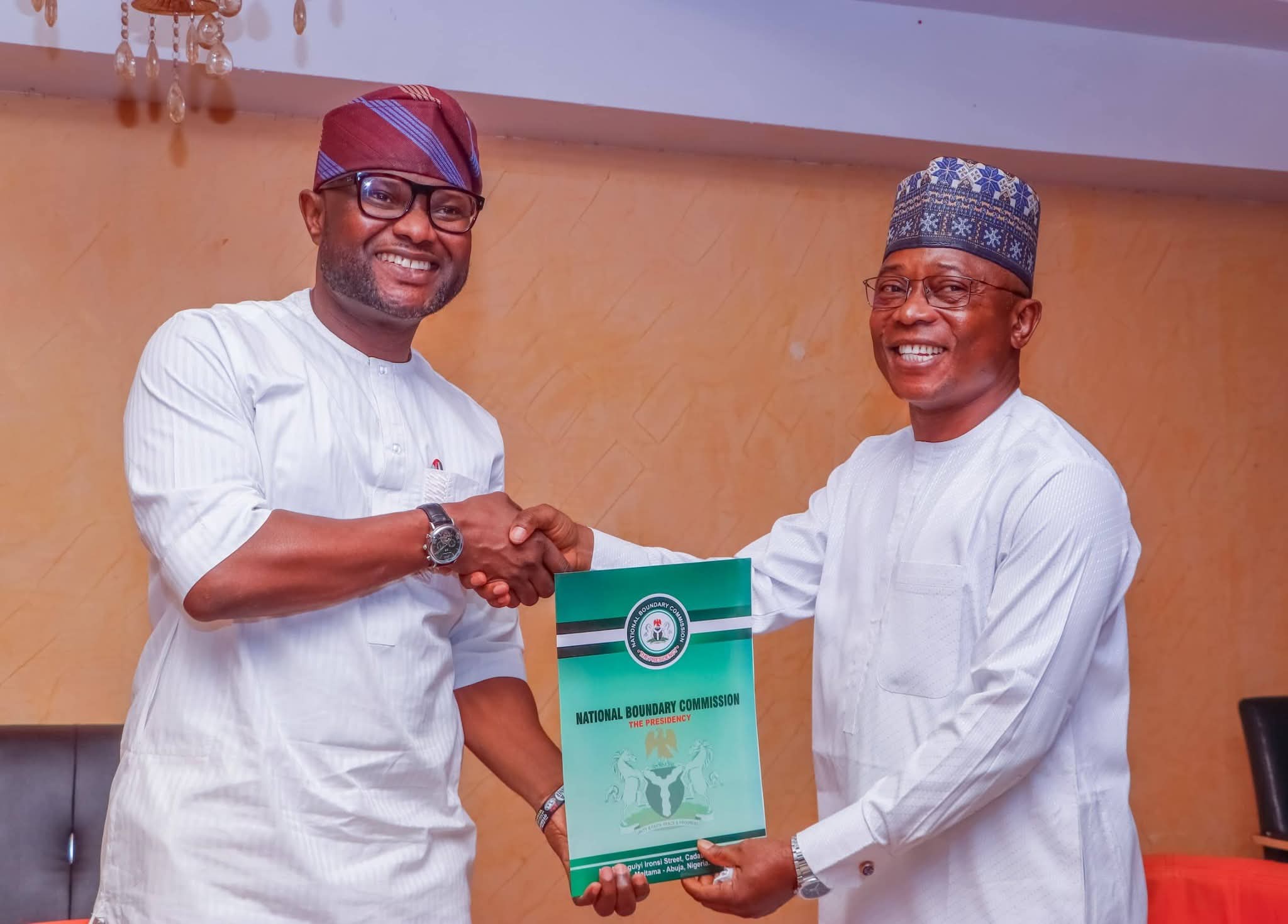
The governments of Kogi and Edo States have thrown their support to the renewed move by the National Boundary Commission (NBC) TO resolve the boundary conflicts between the two states.
Representatives of the two states made the commitment on Thursday in Abuja at a Joint Meeting of Officials convened by the National Boundary Commission, where the Commission’s Director-General, Adamu A. Adaji, outlined a detailed roadmap to conclude the demarcation process that dates back to colonial-era descriptions.
Adaji explained that the Edo–Kogi boundary was originally part of the old Northern and Western Regions boundary, as defined by Legal Notice 126 of 1954, but disagreements over interpretation have continued to fuel disputes in sectors such as Okpella/Okene, Ogori–Ekpedo and the Ake axis.
He said several technical and joint meetings, including field tracing and provisional demarcation carried out between 2000 and 2001, had already produced an approved alignment endorsed by the Commission’s Internal Boundaries Technical Committee in 2006.
Despite earlier progress, the final monumentation exercise was stalled in 2008 following protests by some border communities.
Adaji identified poor sensitisation, elite and traditional interests, funding constraints, and competing claims over natural resources as key obstacles delaying resolution.
He said the current meeting was convened to reassess progress, address grey areas, and chart a practical way forward.
According to him, the proposed demarcation will involve the emplacement of about 100 primary pillars at two-kilometre intervals and roughly 900 intermediate pillars at 200-metre intervals, to ensure the boundary is clearly identifiable on the ground.
He appealed to the two states, traditional rulers and affected communities to embrace peaceful coexistence and support the exercise, stressing that the Federal Government, through the Commission, is determined to conclude the process despite limited funding.
Speaking at the meeting, Kogi State Deputy Governor and Chairman of the State Boundary Committee, Comrade Joel Salifu, acknowledged that past efforts failed largely due to inadequate community engagement.
While affirming Kogi’s readiness to cooperate, he urged the Commission and the Office of the Surveyor-General of the Federation to revisit contentious grey areas to secure the confidence of border communities, particularly in the Ogori–Ekpedo, Okene–Okpella and Ake Island sectors.
Salifu also drew attention to emerging tensions between communities in Kogi and Edo over farmland ownership, calling for urgent intervention to prevent escalation.
He requested the constitution of an all-inclusive demarcation team incorporating traditional institutions and other stakeholders to ensure smooth implementation and adequate security.
On his part, the Edo State Deputy Governor welcomed the initiative, describing it as a demonstration of the Commission’s commitment to peace, administrative certainty and intergovernmental harmony.
He recalled that most segments of the boundary had been mutually agreed upon, except the Ake axis, and expressed optimism that the renewed dialogue would address the reasons the monumentation exercise was not completed.
With both states now aligned behind the Federal Government’s effort, stakeholders expressed hope that the long-standing boundary dispute, rooted in history but sustained by modern grievances, will soon be resolved, paving the way for lasting peace and development in affected communities across Edo State and Kogi State.