
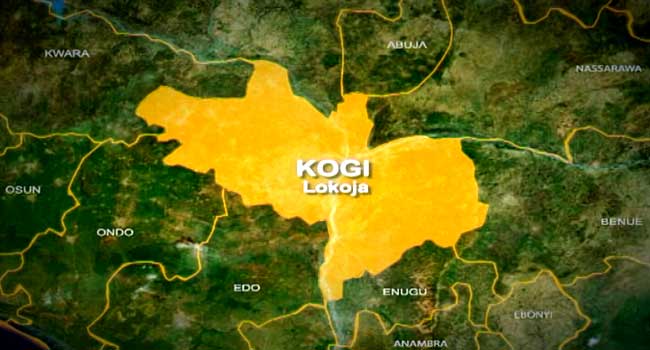
The Kogi State Government has set a December 2026 completion target for the rehabilitation of the Greater Lokoja Water Works, alongside plans to construct a standalone water supply scheme for Ganaja and surrounding settlements in the state capital.
The Commissioner for Water Resources, Engr. Yahaya M.D. Farouk, announced the dual intervention on Monday, November 23, 2026, during a live Radio Kogi programme examining the “Ganaja Community Charter of Demand,” an advocacy initiative convened by the Challenge Parenthood Initiative (CPI).
Engr. Farouk explained that the Greater Lokoja Water Works—which has an installed production capacity of 38 million litres per day and a 13-million-litre reservoir—suffered severe damage during the 2022 floods.
He noted that ongoing restoration works include replacing all six faulty industrial pumps, overhauling electro-mechanical components, and integrating flood-resilient engineering capable of keeping the plant operational during flood levels comparable to the 2012 disaster.
Outlining long-term infrastructure plans captured in the state’s 2027 project framework, the Commissioner revealed that the proposed dedicated water scheme for Ganaja will feature a three-million-litre reservoir, an independent pumping line, and a reticulation network running from the Dunamis Church axis toward Wada to serve Ganaja, Gaduma, Zango, and adjoining communities.
According to him, technical teams will carry out topographical and geophysical surveys to locate an elevated site with stable soil conditions for the new reservoir, ensuring it can withstand flood levels equal to or exceeding those of 2022 without relying on the main network serving the rest of Lokoja.
Farouk added that the state’s broader water master plan incorporates a booster station at Felele and an additional reservoir of between three and five million litres designed to meet projected population growth and water demand in the metropolis up to 2046.
Addressing concerns regarding damaged distribution pipes, he assured residents that pipeline repairs form part of the ongoing rehabilitation, noting that full leak detection will commence once pumping resumes, while urging communities to protect public water installations against vandalism.
Earlier on the broadcast, the Executive Director of Challenge Parenthood Initiative, Eunice Agbogun, stated that the Ganaja Community Charter of Demand identifies potable water, functional primary healthcare facilities, flood-resilient road networks, and a standard Internally Displaced Persons (IDP) camp as the core infrastructural priorities of residents in the corridor.


