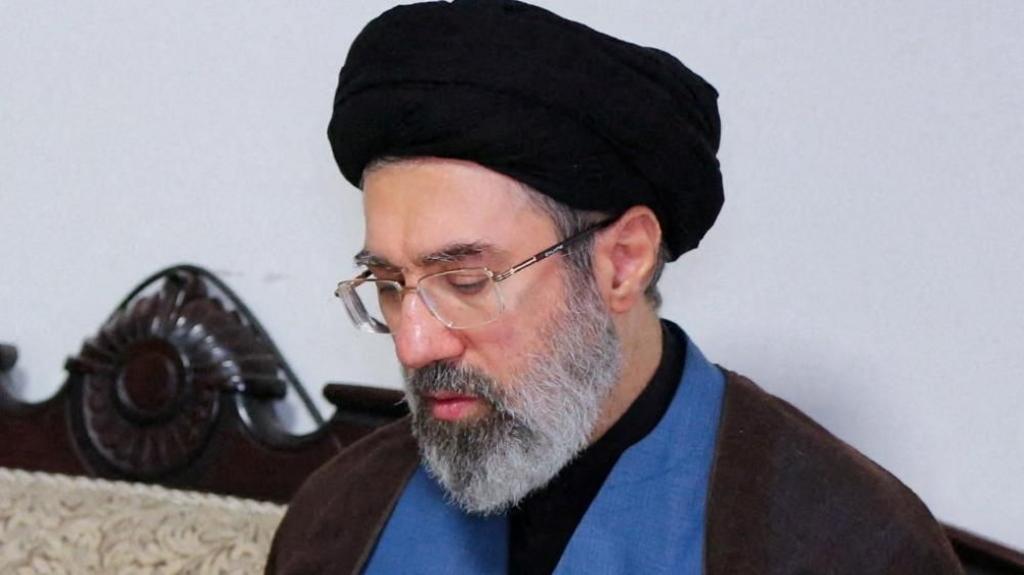
The Assembly of Experts in Iran has announced Mojtaba Khamenei as the country’s new Supreme Leader.
With the much anticipated development, the 56 year-old replaces his father, Ayatollah Ali Khamenei, who was killed at his compound in Tehran in the first wave of US and Israeli strikes
A statement from the Assembly of Experts was read aloud by the presenter on state TV:
“Despite the acute wartime conditions and the direct threats of the enemies against this popular institution, and despite the bombing of the offices of the Secretariat of the Assembly of Experts, which resulted in the martyrdom of several staff members and members of its security team, did not pause even for a moment in the process of selecting and introducing the leadership of the Islamic system.”
The presenter then shouted “Allahu Akbar, Allahu Akbar, Khamenei is the leader.”
Wikipedia profiled the new Supreme Leader as the second-eldest child of the former supreme leader Ali Khamenei, he served in the Iran–Iraq War from 1987 to 1988, and also reportedly took control of the Basij that was used to suppress the protests over the 2009 presidential election.
On 4 November 2019 the US Department of the Treasury sanctioned Mojtaba as part of their policy targeting individuals linked to Ali Khamenei, stating he was involved in repression inside and outside Iran.
He is seen as the most influential son of Ayatollah Ali Khamenei, who was killed on 28 February 2026 by the US-Israeli missile strikes that were carried out against targets in Iran.
On 6 March 2026, it was reported on Zed TV that Khamenei might have been the target of an airstrike in Tehran. It was later confirmed by Israeli sources that he was lightly wounded in an airstrike, but survived. On 8 March, Mojtaba Khamenei was selected as the Supreme Leader in the 2026 election.
He is considered to have far-right views that are among the most hardline of the Iranian principlists, and has close ties to some of the “most ideologically extremist clerics” per a report from Atlantic Council. Analysts have seen him as favorable to developing nuclear weapons and reinterpreting his father’s fatwa on the matter.